
The luteal phase in the female cycle
The luteal phase in the female cycle begins immediately after ovulation. The luteinising hormone (LH) is responsible for the formation of the corpus luteum from the follicle after ovulation. This phase of the cycle symbolizes autumn. When hormone levels drop, you feel calmer, more reflective and perhaps sensitive, sad or hot-tempered and restless (PMS).
In the luteal phase:
- estrogen levels continue to rise and the uterine lining also continues to thicken.
- progesterone levels start to rise.
- estrogen, testosterone and progesterone reach their peak towards the end of this cycle phase and then begin to drop. They reach their lowest point just before menstruation. Many women experience PMS symptoms. In most cases, it is caused by too much oestrogen in the body (in relation to progesterone).
- metabolism speeds up.
The duration of the luteal phase
The luteal phase is the period in the cycle that occurs between ovulation and your period. A normal luteal phase should have a duration of about 11 to 17 days.
Do I have a long luteal phase?
A (too) long luteal phase lasts much longer than 17 days. A long luteal phase can be due to hormone disorders such as PCOS, for example. But if a lot of time has passed since your last ovulation that could also mean that you are pregnant and just haven’t noticed it yet.
Do I have a short luteal phase?
The luteal phase would be (too) short if it lasts less than 10 days or the period starts 10 days or less after ovulation. A short luteal phase does not give the uterine lining the opportunity to grow and develop well enough to accommodate a baby. As a result, it can be harder to get pregnant and maintain a pregnancy if you’re having a short luteal phase.
Symptoms in the luteal phase - PMS is not normal?
Many women still believe that PMS is an inevitable part of being a woman. After all, so many of us experience it, it must be normal! We accept that once a month we feel far from great for a few days, a week – or even longer in some cases. We are grumpy, angry, feel down, anxious and lack confidence. We’re frustrated, bloated, constantly hungry and our skin is acting up.
Well, we have news for you: PMS is not normal. Menstruating people are not meant to suffer before their period and feel bad month after month. And if they do? Then the solution is not to take medication. The pill may seem to help at first glance, but it only masks the symptoms – while the real causes of PMS continue to bubble away under the surface. It is the same with painkillers. These drugs mask the pain and numb the signals your body is sending. Unfortunately, they do not treat the underlying causes.
What is PMS?
PMS stands for ‘premenstrual syndrome’, but it can actually occur any time after ovulation, i.e. in the luteal phase.
PMS refers to a group of physical, psychological and emotional symptoms that menstruating people experience during the luteal phase. Symptoms include:
- acne
- bloating
- water retention
- sensitive/tender breasts
- cravings and/or increased appetite
- mood swings
- irritability, moodiness and/or depression
- fatigue
- headaches and/or migraines
- difficulty concentrating
- lower back pain
- cramps
Experts believe that PMS is triggered (only in part) by natural hormonal changes during the menstrual cycle. While it is true that hormones fluctuate in a cyclical pattern, it is also known that problems tend to occur when hormones are out of balance. In PMS, for example, this is the ratio of progesterone to estrogen. So if a woman has too much estrogen in her body (this is also known as estrogen dominance), or too little progesterone overall. If you suspect a hormonal imbalance, you can also have your hormone levels tested.
What can I do about PMS?
Experts also firmly believe that nutrient deficiencies can play a big role in PMS symptoms. Research has shown a link between low vitamin D, calcium and magnesium levels and PMS symptoms. Studies suggest that supplementation with magnesium and vitamin B6 can make a huge difference in the severity of PMS. In any case, it is advisable to look for the cause of the symptoms first. With a cyclical lifestyle and targeted strategies in the area of diet and exercise, as well as the use of specific herbs, you can usually already make a big difference.
The most important hormone in the luteal phase: Progesterone
Progesterone is the predominant hormone in the luteal phase and is produced by the corpus luteum, but also by the adrenal glands. The body uses cholesterol as a building block to produce progesterone. Progesterone levels peak in the middle of the luteal phase. If conception does not occur, the corpus luteum gradually begins to break down after ovulation, causing progesterone levels to drop and eventually menstruation starts. During pregnancy, the placenta produces progesterone.
What does progesterone do in the body?
Progesterone…
- stops the build-up of the uterine lining.
- reduces the production of cervical mucus.
- prepares the uterine lining for possible implantation of the fertilized egg.
- supports early pregnancy and helps to maintain pregnancy.
- reduces uterine contractions to prevent labour during pregnancy.
- has a muscle-relaxing effect and thus reduces the activity of bowel movement, which can lead to constipation.
What you should eat in the luteal phase
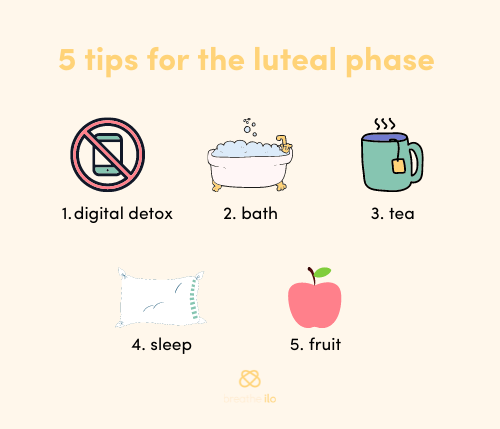
Your body needs more energy now! Make sure you eat enough food. To prevent PMS, focus on foods rich in B vitamins, high-quality omega-3 fatty acids and magnesium during this phase. Also avoid junk food and alcohol and reduce your caffeine intake. Instead, drink water or unsweetened herbal tea. A tea blend for the luteal phase is also recommended. Chickpeas, green leafy vegetables and orange fruit and vegetables should be on your shopping list. Make sure you eat a diet rich in fibre, as the increased progesterone levels now reduce bowel activity, which can lead to constipation.
Exercise during the luteal phase
During the first half of this cycle phase, you still have energy for heavier workouts with weights. In the second half of the luteal phase, however, reduced performance is completely normal. This is a good time for active recovery and light weight training, paired with yoga or pilates. Baths with magnesium-rich salts are also wonderful to improve muscle regeneration.
Everyday life & work in the luteal phase
Hormone levels in this phase allow you to focus well on details and complete projects. Towards the end of the luteal phase, when the hormone level drops, you have less energy and probably want to withdraw more and more. Try to avoid too much artificial light in the evening (especially from screens) and make sure you get enough restful sleep (7-8 hours a night) so you don’t put unnecessary strain on your body.